NOVEMBER 1989 – APRIL 1990 · WALLONIA · 50.6326, 5.5797
The Belgian wave
Thousands of Belgians, gendarmes among them, reported low, slow, silent triangles over five months; one March night the Air Force scrambled F-16s whose radars briefly locked something they could not hold. The Air Force put its general on stage with the civilians.
On the evening of 29 November 1989, along the Eupen corridor in eastern Belgium, dozens of reports — a substantial number from gendarmes on duty — described a dark triangular platform with three downward white lights and a central red one, moving slowly and silently at low altitude. Reports of the same object class continued across Wallonia through the winter at a rate no European wave had matched, collected and cross-examined by SOBEPS, the Brussels-based study society, with the open cooperation of the Belgian Air Force — a government-civilian arrangement without precedent.
On the night of 30–31 March 1990, after gendarmerie visual reports and radar correlation from two stations, the Air Force scrambled two F-16s. Over the following hour their onboard radars registered several brief lock-ons to targets showing extreme acceleration figures; the pilots saw nothing. The Air Force's subsequent technical analysis attributed the lock-ons to atmospheric propagation effects and processing artifacts, and Chief of Operations Maj. Gen. Wilfried De Brouwer presented the findings at a joint press conference with SOBEPS — while stating that the visual wave itself, including his gendarmes' triangles, remained without explanation. No aircraft type, allied or otherwise, was ever produced as a candidate; a U.S. Air Force response to the Belgian government denied any F-117 or similar operations over Belgium.
In 2011 the best-known photograph of the wave — the Petit-Rechain triangle, long analyzed for its light physics — was confessed by its maker to be a styrofoam model, a demolition the archive records with the same weight as the wave it does not explain: the photograph postdated the Eupen reports by months and accounts for none of the visual record. The Belgian wave remains the modern benchmark for a mass-witness, government-engaged, unresolved case.
The artifacts
Hosted by this archive from the cited originals — the record you can look at.
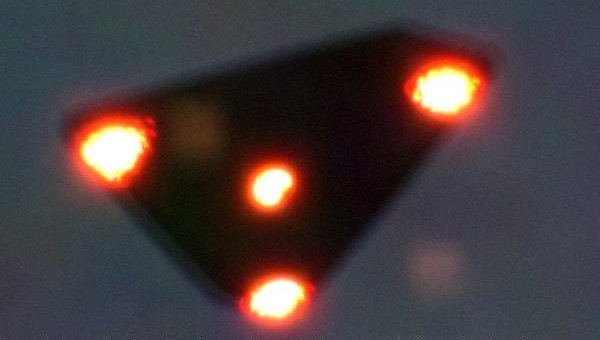
The Petit-Rechain photograph — confessed hoax
The wave's iconic image, analyzed for two decades and confessed in 2011 as a styrofoam model. Kept in the file as what it is: it postdates the Eupen reports by months and explains none of the visual record.
J.S. Henrardi · Public domain (released by author) · source
